Seasonal exterior pest management in Franklin County balances heavy woodland pressure against rural residential envelopes. Properties bordering South River State Forest or the steep grades of Pomeroy Mountain encounter…
Seasonal exterior pest management in Franklin County balances heavy woodland pressure against rural residential envelopes. Properties bordering South River State Forest or the steep grades of Pomeroy Mountain encounter routine seasonal pest pressures driven by forest leaf litter and moisture gradients. In the Gould Hollow and South River Valley sectors, late spring thaw accelerates carpenter ant foraging from damp hardwood stands into wood sills, while autumn drops prompt deer mice to abandon high grasses for stone cellars and insulated crawl spaces. Addressing these patterns through external exclusion prevents the continuous application of airborne pesticides inside living spaces, preserving residential indoor air quality and mitigating groundwater runoff concerns near the Highland Springs Reservoir watershed.
A recurring exterior program fits homes facing chronic annual re-infestation from dense vegetative surroundings, such as older timber builds along North Poland Road or agricultural perimeters near Bear Swamp Orchard. The primary operational trade-off of an exterior-only defense is interior latency: while external residual bands stop new arrivals, active interior colonies or established mouse nests require mechanical trapping protocols to clear existing populations. For properties near the Ashfield Plain Border or Sanderson Academy Grounds, treatments leverage microencapsulated suspensions applied 3 feet up the exterior wall and 3 feet outward on soil borders, creating an impassable barrier that degrades predictably under UV exposure without contaminating local shallow wells.
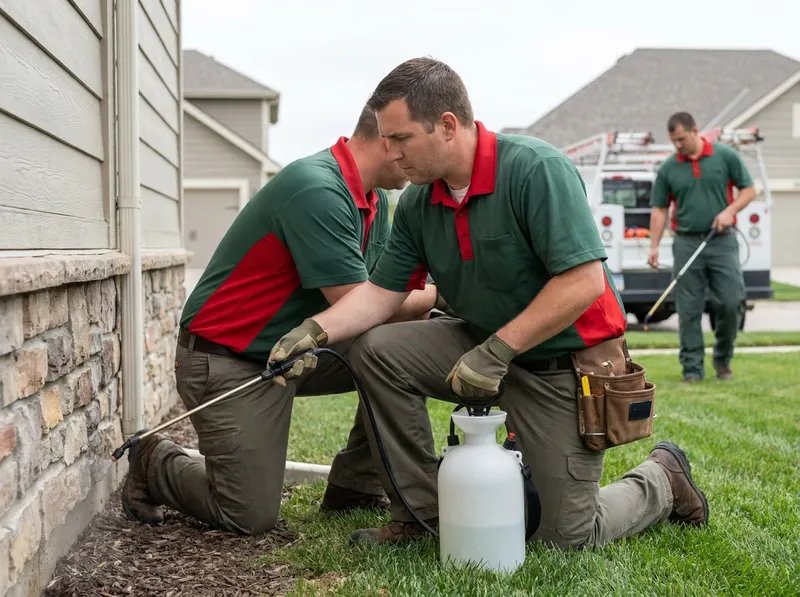
Technicians evaluate building geometry, moisture accumulation from uncleaned roof gutters, and structural gaps larger than 0.25 inches. Numbered protocols govern every seasonal visit: 1. Complete perimeter survey identifying high-risk structural entry zones. 2. Mechanical web and nest removal from fascia boards, trim, and overhangs up to 18 feet. 3. Application of non-repellent liquid barrier to stone, block, or concrete foundation walls. 4. Placement and servicing of tamper-resistant exterior rodent stations along natural travel corridors. 5. Documentation of moisture or brush clearance recommendations for the property owner.
Every job gets a firm, written price after a free on-site visit.
Tell us about your seasonal exterior defense program job in Kansas and we'll send a clear, written quote, usually the same day.
 Viresta Insect Experts