Rural residential architecture around South River Valley and the Pomeroy Mountain Vicinity features expansive rooflines and clapboard sidings that absorb intense southwest solar radiation during late summer. Adult…
Rural residential architecture around South River Valley and the Pomeroy Mountain Vicinity features expansive rooflines and clapboard sidings that absorb intense southwest solar radiation during late summer. Adult cluster flies (*Pollenia rudis*) seek out these warmed exterior wall faces in August and September, slipping behind fascia boards, soffit gaps, and louvers into unconditioned attic spaces to spend the winter dormant. Unlike filthy blowflies or houseflies that breed in garbage or decaying meat, cluster flies reproduce as parasites inside earthworms in surrounding pasture soils along the Ashfield Plain Border and Gould Hollow. They present zero risk to food supplies or structural framing, yet when home heating systems warm the ceilings during winter thaws, thousands of disoriented flies exit wall voids into living quarters, accumulating at light fixtures and south-facing windows.
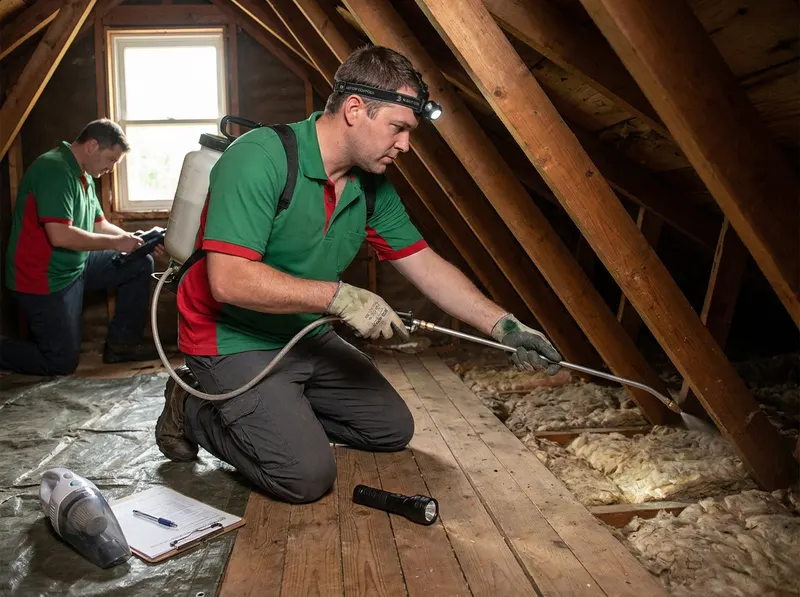
Effective management relies on structural exclusion and selective barrier timing rather than broad indoor fogging. Indoor aerosol bombs disperse chemical residues across finished interior furnishings while leaving deep wall voids untouched, failing to address the true harborage sites. The Caregiver method implements non-staining micro-encapsulated perimeters applied along the upper roofline, soffit joints, and upper window trim in late summer before insects penetrate structural gaps. For attics with existing overwintering insect populations, high-efficiency particulate air (HEPA) extraction removes dormant masses from structural rafters, paired with natural desiccant dust applications inside boxed eaves and knee-wall cavities. This prevents indoor air contamination while maintaining absolute defense against the seasonal emergence cycle.
Homes situated along North Poland Road Area and the Kansas District frequently face dual pressures from cluster flies and conifer seed bugs descending from adjacent mixed hemlock and hardwood stands. Properties requiring treatment receive physical exclusion on high-elevation entry points: 20-mesh stainless steel screening secured behind ridge vents and custom silicone sealing around gable vents. If an attic measures under 1,500 square feet with accessible flooring, treatment completes within 90 to 120 minutes. If homes feature complex, unfinished multi-level post-and-beam attic timbering, structural access requires individualized crawlspace protocols and extended sealing sequences to ensure complete containment.
Every job gets a firm, written price after a free on-site visit.
Tell us about your cluster fly and attic overwintering pest control job in Kansas and we'll send a clear, written quote, usually the same day.
 Viresta Insect Experts