Targeted cockroach remediation relies on biological exploitation rather than broad-spectrum synthetic pyrethroid aerosol sprays. Over-the-counter baseboard sprays frequently cause population scattering or budding,…
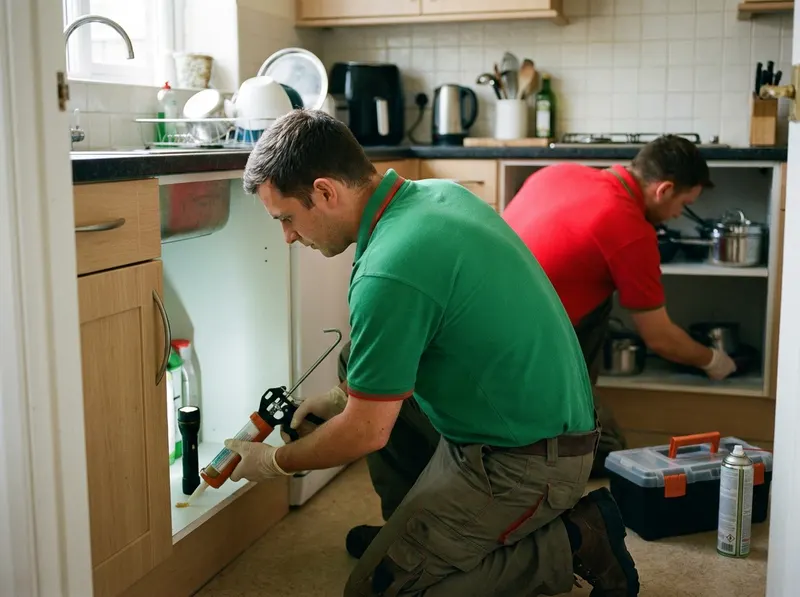
Targeted cockroach remediation relies on biological exploitation rather than broad-spectrum synthetic pyrethroid aerosol sprays. Over-the-counter baseboard sprays frequently cause population scattering or budding, dispersing gravid female cockroaches deeper into sub-wall voids, plumbing chases, and insulation. In rural Franklin County properties, from older wood-frame farmhouses along Gould Hollow and South River Valley to residences near the Ashfield Plain Border, cockroaches exploit structural moisture gradients near water lines, basement sumps, and kitchen motor housings. A targeted baiting approach utilizes secondary mortality: foraging nymphs and adults consume a precisely placed, non-volatile bait matrix, return to harborages, and transfer the active ingredient through coprophagy and necrophagy, collapsing the aggregation at the source.
Effective remediation couples bait placement with mechanical sanitation. Technicians utilize certified HEPA vacuum units to physically extract live insects, oothecae (egg cases), and allergenic cast skins from drawer slides, sub-sink kickplates, and compressor compartments, instantly lowering the population load. This physical extraction prevents indoor air contamination and mitigates asthma-triggering antigens before biological controls are introduced. Following vacuuming, non-repellent gel baits containing active ingredients such as indoxacarb or dinotefuran are placed in micro-droplets (0.1 to 0.5 grams) directly inside structural crevices, hinge points, and behind electrical faceplates where cockroaches aggregate, keeping chemistries inaccessible to non-target surfaces, household pets, and domestic well lines.
Structural environments around the Kansas District, North Poland Road Area, and the Pomeroy Mountain Vicinity often present unique microclimates where kitchen humidity and basement dampness intersect. Bait remediation accommodates these damp conditions by utilizing moisture-resistant matrix formulations that do not sour or mold within 48 hours of placement. Liquid insect growth regulators (such as hydroprene or pyriproxyfen) are applied as discrete point-source translocating devices or localized crack-and-crevice barriers. These compounds disrupt the chitin synthesis and juvenile hormone balance of immature roaches, rendering developing nymphs sterile adults and halting the reproduction cycle permanently. Complete remediation requires a sequence: 1. Diagnostic inspection and harbor map identification; 2. Mechanical HEPA removal and surface clearing; 3. Structural bait matrix and growth regulator placement; 4. A 14-to-21-day follow-up inspection to monitor egg hatch cycles and replenish consumed bait stations.
Every job gets a firm, written price after a free on-site visit.
Tell us about your cockroach sanitation and baiting remediation job in Kansas and we'll send a clear, written quote, usually the same day.
 Viresta Insect Experts