Property owners seeking an experienced pest control service Kansas contractor encounter distinct environmental pressures caused by dense mixed hardwood canopies, wet river bottomlands, and historic architectural framing across Franklin County. Structural timbers and dry stone walls remain persistently vulnerable to subterranean insects and nesting rodents, while sharp seasonal temperature drops push outdoor woodland populations directly toward heated stone foundations and rim joists.
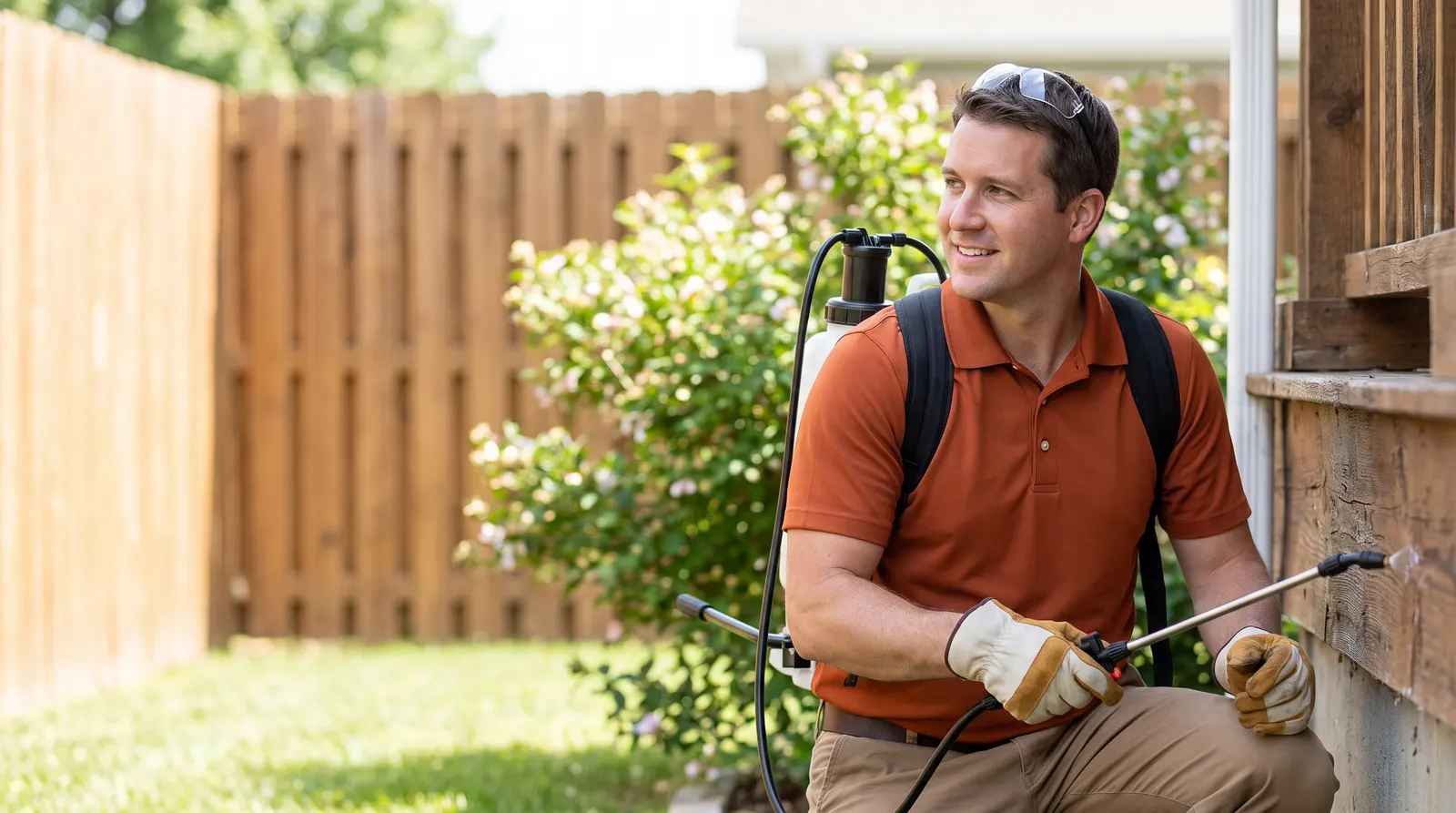
Pest Control Service company in Kansas is a professional biological mitigation and structural exclusion service that neutralizes insect and vertebrate vectors from residential properties throughout Franklin County.
Every service reflects the same meticulous attention to detail, whether it's a single job or a larger pest control service project across Kansas.
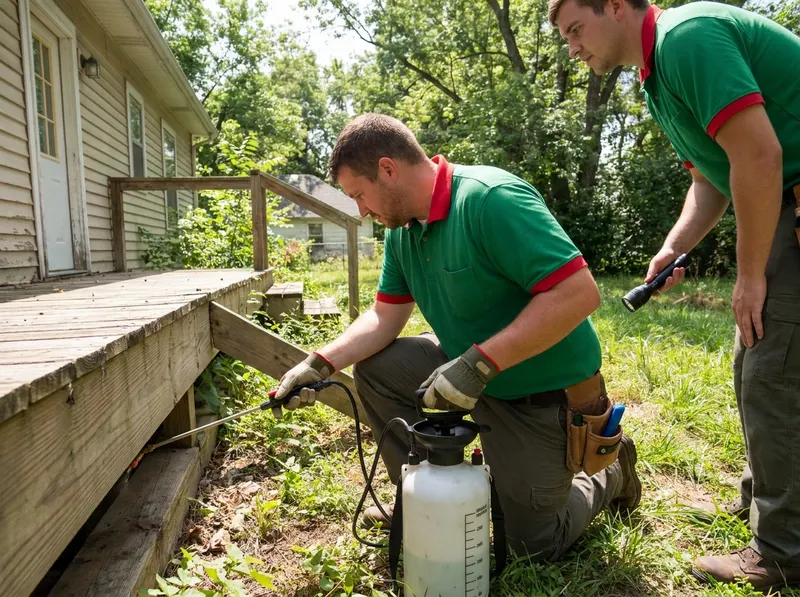
Wood-boring carpenter ants (Camponotus pennsylvanicus) hollow out structural timber framing to construct satellite nesting galleries rather than ingesting cellulose. Targeted eradication isolates primary outdoor parent colonies residing in rotting tree stumps or cordwood piles from indoor satellite nests inside damp subfloors, deploying non-repellent transfer agents that foraging workers transport straight to the reproductive queen. Technicians perform acoustic and moisture testing along structural floor joists, rim joists, and wall plates to map internal gallery networks, executing precision void injections that collapse the colony infrastructure within 14 to 28 days without broad indoor spraying.
Get a quote →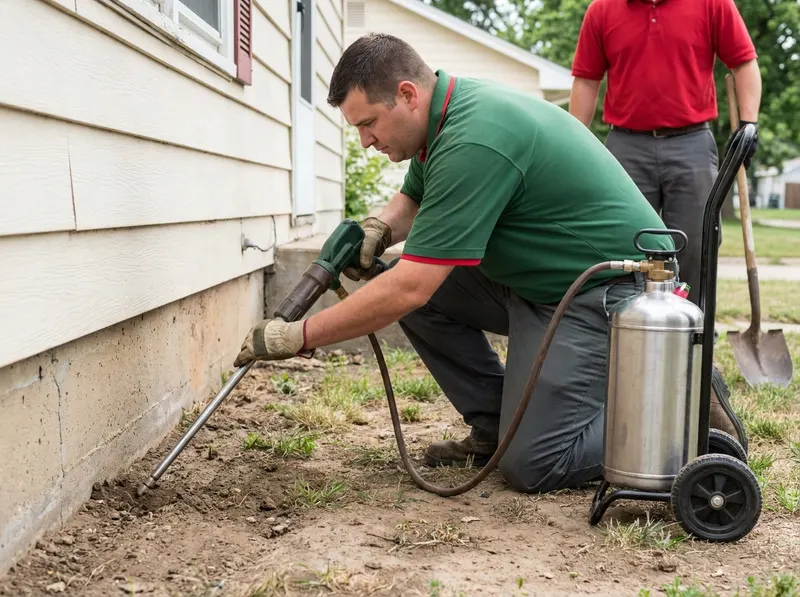
Subterranean termites (Reticulitermes flavipes) build protective earthen shelter tubes across foundation footings to access structural sill plates and load-bearing framing. Direct perimeter defense establishes an undetectable non-repellent liquid protective zone in the surrounding soil, terminating subterranean foraging lines and preventing the breakdown of primary structural weight-bearing posts. Technicians utilize calibrated hydraulic trenching and rod injection equipment to introduce termiticide solutions at exact depths along foundation walls, addressing hidden voids in rubble stone masonry and slab expansion joints to ensure uninterrupted continuous structural protection.
Get a quote →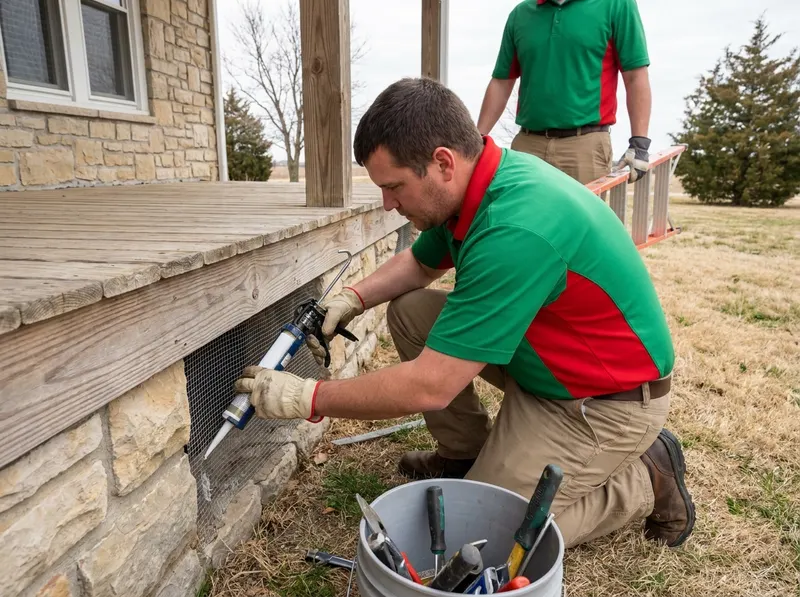
Perimeter rodent exclusion physically seals structural openings where white-footed mice (Peromyscus leucopus) and meadow voles exploit gaps down to 1/4 inch along foundation footings. Technicians install copper mesh, 19-gauge hot-dipped galvanized hardware cloth, and architectural hydraulic patching compounds to block pest access into finished basements, exterior bulkheads, and rim joist spaces. The process includes thorough inspection of siding kick-outs, utility conduit entries, and stone foundation mortar joints, followed by internal snap-trapping cycles that clear trapped populations without leaving decomposing rodents inside wall cavities.
Get a quote →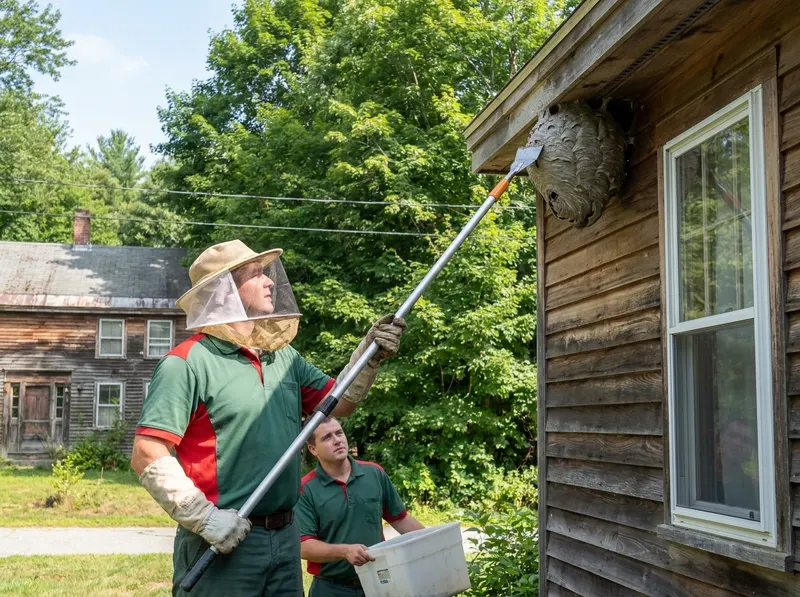
Aerial yellow jackets, baldfaced hornets (Dolichovespula maculata), and paper wasps create high-risk defensive aerial nests under soffits, eaves, structural overhangs, and exterior porch frameworks. Mechanical removal neutralizes aerial colonies using targeted freezing contact compounds and micro-residual barriers, physically extracting intact nesting envelopes without leaving volatile chemical residues in living areas. Technicians utilize protective containment gear and specialized extension pole injectors to treat nests at heights up to 30 feet, eliminating defensive worker swarms and removing structural attachments to prevent secondary carpet beetle infestations in abandoned comb.
Get a quote →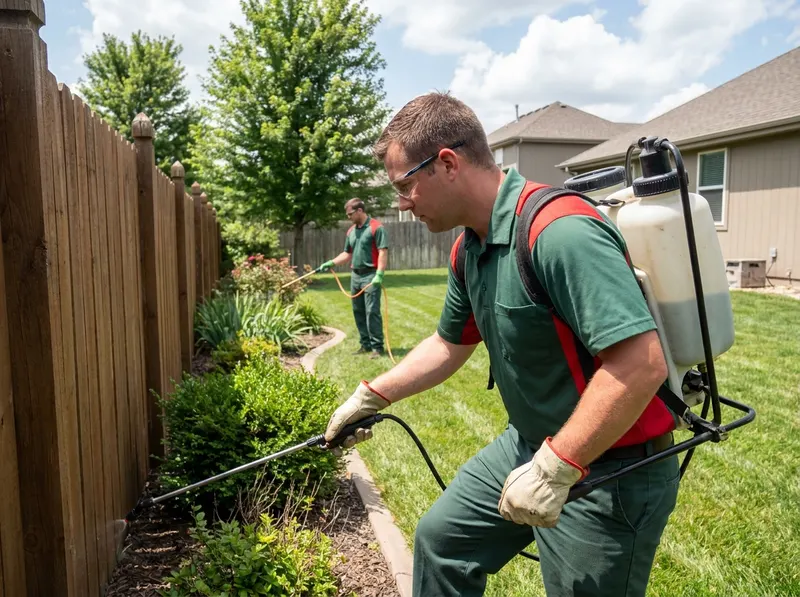
Tick and mosquito management establishes targeted exterior barrier zones across vegetative margins, brush transitions, and shaded wood lines surrounding residential outdoor areas. Focused low-pressure applications disrupt the lifecycle of blacklegged deer ticks (Ixodes scapularis) and woodland mosquitoes within property borders without drifting onto organic garden plots or natural aquatic runoffs. Technicians concentrate treatments on leaf litter layers, low shrub underbrush, and perimeter timber borders where humidity remains high, applying micro-encapsulated formulations that adhere to organic matter and provide residual protection for 21 to 30 days.
Get a quote →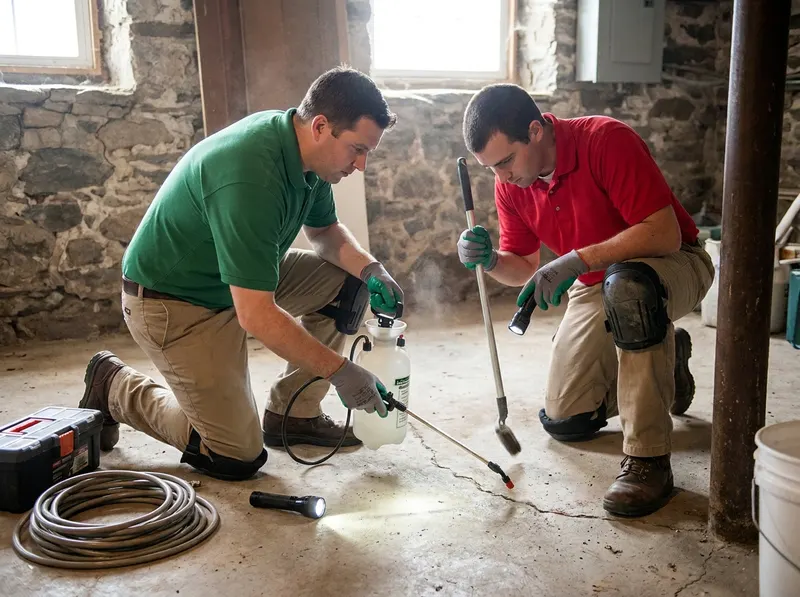
Crawling predatory arachnids and house centipedes (Scutigera coleoptrata) colonize damp subterranean spaces where high relative humidity fosters secondary prey populations of silverfish, sowbugs, and fungus gnats. Remediation incorporates deep wall void dusting with desiccant diatomaceous materials and inorganic borate dusts alongside perimeter residual bands, rapidly dropping localized populations while preventing transit upward into primary living quarters. Technicians assess sub-grade ventilation, sump crock seals, and moisture levels, recommending target relative humidity reductions below 50 percent to eliminate the microclimate sustaining these predatory species.
Get a quote →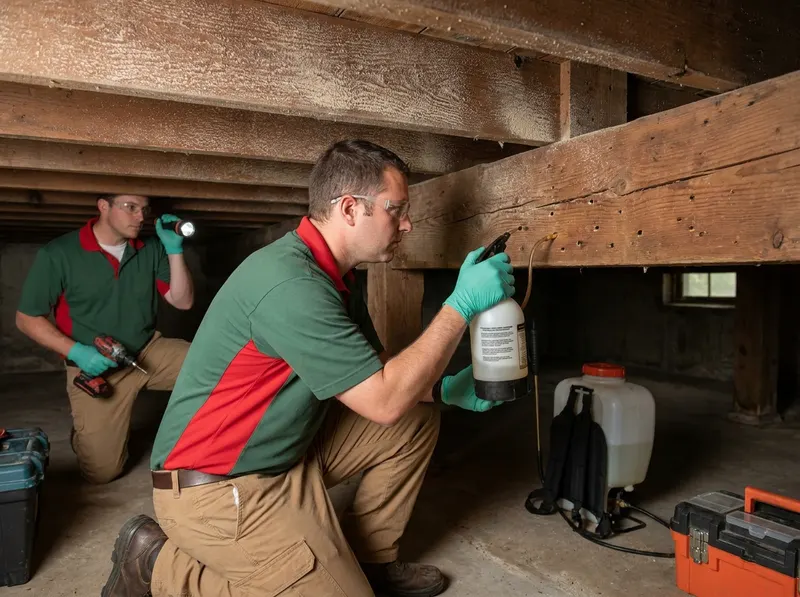
Lyctid and anobiid powderpost beetles deposit larvae that tunnel inside historic structural floor joists, hand-hewn structural posts, and unfinished subfloors, reducing hardwoods and softwoods to fine talc-like frass over multiple generations. Remediation utilizes deep-penetrating disodium octaborate tetrahydrate (DOT) mineral solutions sprayed or brushed directly onto bare unfinished timber, permanently crystallizing within the wood fibers to stop ongoing larval digestion and emerging adult re-infestation. Technicians perform pin-probe moisture tests to confirm penetration feasibility and verify whether structural framing requires supplemental sistering or timber stabilization.
Get a quote →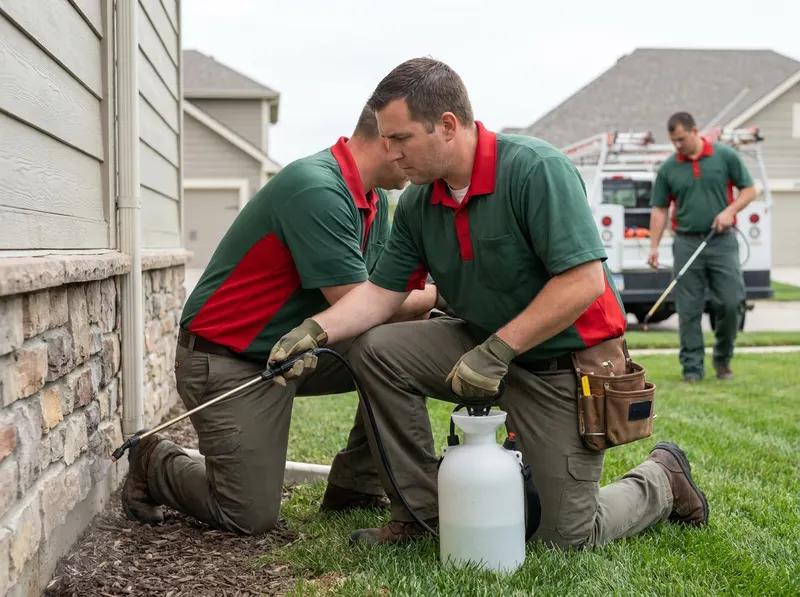
Scheduled exterior defense provides scheduled three-season protective applications along foundation perimeter bands, window headers, and lower structural trim. Treatments prevent seasonal migrations of cluster flies (Pollenia rudis), western conifer seed bugs, and boxelder bugs before the insects accumulate inside structural attic insulation and wall spaces during seasonal autumn temperature drops. Technicians clear spider webs, apply weather-resistant synthetic pyrethroid or natural pyrethrum barriers around exterior architectural penetrations, and treat entry seams along eaves to maintain a continuous repellent threshold from early spring through late autumn.
Get a quote →You get a firm, itemized quote for your pest control service before any work begins, no surprises, no pressure.
Careful prep, tidy work, and a full cleanup when we are done. We treat your home and belongings like our own.
The same trusted, background-checked team from the first call to the final check.
If structural foundations display fine boring frass or damp wood softening along framing sills, select focused wood-destroying insect treatments rather than surface insect sprays. The trade-off centers on application scope: structural timber treatments require localized access and precise internal micro-injections, whereas basic topical applications merely deter surface activity without resolving reproductive queens inside wall cavities. If unexplained scratching occurs inside wall voids or attic insulation, choose complete mechanical rodent exclusion instead of poison baiting stations.
Mechanical exclusion seals entry gaps exceeding 1/4 inch with galvanized wire mesh and architectural masonry fillers, requiring an initial investment in detailed physical labor; temporary poison bait stations offer lower immediate labor effort but carry the severe trade-off of carcass decay within enclosed walls and potential secondary exposure risks to predatory native wildlife. For residential properties positioned alongside natural surface waters or shallow private wells, select targeted botanical perimeter micro-encapsulations over broad soil saturation drenches. Targeted micro-encapsulations provide a controlled chemical residual bound tightly to exterior foundation masonry, eliminating pest transit while completely preventing chemical migration into groundwater tables.
When managing seasonal cluster flies or boxelder bugs accumulating on sunny south-facing siding, choose a timely late-summer preventative exterior residual wash over mid-winter attic fogging; exterior applications stop insects before they breach building soffits, whereas interior fogging creates widespread insect drop across finished living quarters without addressing the primary structural gaps that let them enter. If an infestation involves active subterranean termites along a rubble foundation, select direct non-repellent soil trenching and foundation stem injection instead of surface bait stakes; localized soil treatments create a continuous chemical barrier that destroys the colony through social grooming, whereas bait monitoring stations require several months to achieve colony reduction and leave timbers vulnerable during peak spring moisture periods.
Every project gets a firm, written price after a free on-site visit. Ranges below for orientation.
Tell us about your pest control service job and we'll send a clear, written quote, usually the same day. Or just call and talk to a real Kansas pro.
(816) 451-8652
Properties across the Kansas District and Gould Hollow interface directly with heavily forested regional acreage, leading to persistent moisture and wood-decay issues along aging fieldstone foundations and dry-stacked retaining walls. Proximity to the South River Valley and steep elevation gradients along the Pomeroy Mountain Vicinity promote carpenter ant colony expansion and prompt white-footed mice to enter residential framing every autumn as night temperatures drop into the 30s. Franklin County's extensive forest cover supports high densities of blacklegged ticks and woodland rodents, making structural defenses essential for preventing biological vectors from establishing harborage near residential foundations. Environmental protection for private potable wells located near Highland Springs Reservoir, Bear Swamp Orchard, and the Sanderson Academy Grounds requires technicians to deploy carefully calibrated, non-migrating perimeter defenses rather than uncontained yard drenches that risk runoff into local watersheds. Technicians working along North Poland Road and the Ashfield Plain Border regularly encounter hand-hewn chestnut and hemlock beams dating back over a century, necessitating specialized low-moisture borate timber applications to resolve historic powderpost beetle activity without softening antique fibers or staining finished woodwork.
Free estimates for Kansas & the surrounding area.
 Viresta Insect Experts