Thermal pest remediation operates on the biological thermal death point of Cimex lectularius. Research demonstrates that adult bed bugs, nymphs, and desiccation-resistant eggs denature and perish when exposed to 122°F…
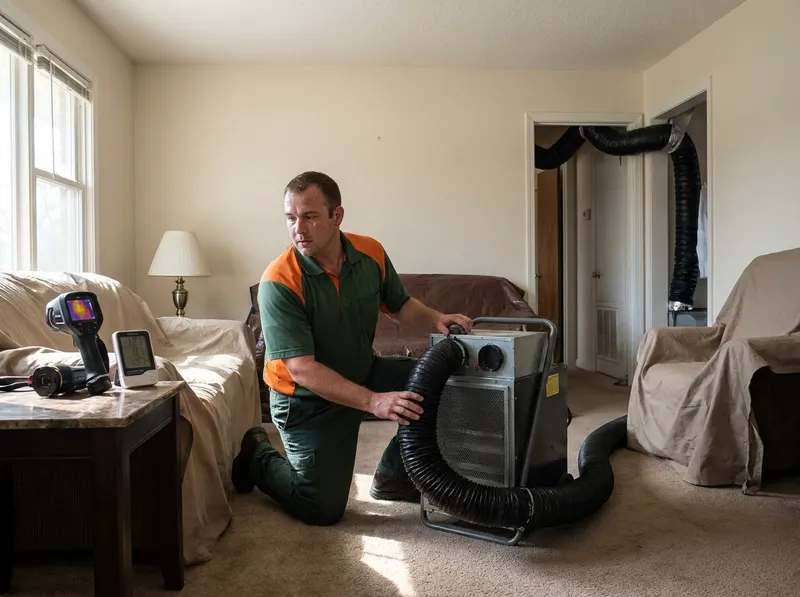
Thermal pest remediation operates on the biological thermal death point of Cimex lectularius. Research demonstrates that adult bed bugs, nymphs, and desiccation-resistant eggs denature and perish when exposed to 122°F (50°C) for under ninety seconds. Convective heat systems distribute forced hot air through targeted ducting into structural voids, wall assemblies, subfloors, and upholstered fabrics. Unlike retail pyrethroid sprays, which induce behavioral scattering and face documented insect resistance rates exceeding 80%, directional heat penetrates deep structural harborages that liquid insecticides cannot reach.
Pre-treatment preparation determines thermal success. Technicians deploy calibrated wireless thermistors throughout the living area to record internal temperatures inside mattress cores, baseboard recesses, and structural cavities. Air velocities are regulated by high-temperature axial fans that circulate heat into cool air pockets, preventing insects from retreating into cooler perimeter wall cavities. Occupants must remove vinyl window coverings, wax items, aerosol cans, and specific consumer electronics before heating commences. The process leaves no chemical residues, eliminating the indoor pet and child toxicity hazards inherent to persistent broadcast synthetic pesticide sprays.
Historic housing stock across Jackson County presents distinct thermodynamic profiles. In late 19th-century brick four-squares in Pendleton Heights and Coleman Highlands, exterior solid masonry acts as a heat sink that requires higher BTU outputs to penetrate deep plaster wall lath. Conversely, modern multi-family loft units in the Crossroads Arts District and River Market feature concrete subfloors and centralized HVAC networks that demand precise door perimeter sealing to isolate units and preserve 130°F thermal boundaries. Single-family bungalows in Waldo and Brookside typically demand 600,000 to 1.2 million BTUs of mobile thermal capacity to treat crawlspaces, hardwood floors, and attics simultaneously.
Every job gets a firm, written price after a free on-site visit.
Tell us about your bed bug thermal remediation job in Kansas and we'll send a clear, written quote, usually the same day.
 Viresta Insect Experts